A correctly attracted cupola does greater than air vent an attic room or crown a ridgeline. It sets the tone of the whole roofscape, telegraming age, provenance, and care. On historic homes and organizations, the cupola is a handshake across time. Obtain the proportions right, regard the products and joinery, and your eye reads heritage, not replica. As somebody who has brought back copper and zinc roofing system ornaments on buildings from 1870 through the 1930s, and appointed brand-new job where originals had actually died, I have found out that the most persuasive "historical" detail is the one that quietly belongs. Custom-made cupolas, when created with self-control, do precisely that.
What a cupola communicates prior to you also discover it
Stand back from a late Victorian carriage home or a Federal farmhouse. You clock the ridge, the chimney mass, possibly the eaves. After that you feel the cupola, usually before you name it. It calibrates range, stresses balance, and provides the roof covering a vertical heart beat. On barns, it once served air flow and daylighting. On civic structures, it noted celebration and authority. On seaside cottages, it broke wind loads and added hunt light. Today, when we build or bring back, we chase that very same silent authority with personalized cupolas tuned to the original intent.
There is no solitary "historical" cupola. The appropriate shape depends on area, age, and surrounding information, from rake moulds to dormer cheeks. A high 12:12 roof desires a taller, a lot more vertical cap. A reduced Georgian hipped roofing system chooses a controlled lantern with a heavy entablature. Duplicate a supply profile without weighing these signs and the roofing checks out ad hoc.
The grammar of proportion
Historic building contractors counted on ratios more than catalog components. When I measure originals, I keep going back to a few proportional facts. The base size of the cupola typically lands in between one 8th and one fifth of the total ridge size it punctuates. The body elevation frequently equals the base width, with the cap height falling between one third and one half of the body. Louver blades or sash lights usually sit inside a structure that reviews as one seventh to one nine of the total body width. These are not laws, they are vernacular routines, yet they are the difference in between stylish and off.
A useful instance. We changed a storm-wrecked light on a 1908 shingle style home in Marblehead, ridge size 38 feet, roofing pitch 9:12. The original footprint ghosted in the tiles at 64 inches square, about one 7th of the ridge. The photographs revealed a two-tiered copper cap, each tier one third of the phase below it. We restore at 64 inches by 64 inches, maintained the body at 60 inches tall, and offered the cap an overall of 28 inches across both rates. The outcome really felt unavoidable because the numbers mirrored what the eye expects, also if the owner could not express why it worked.
Material choices that age with grace
You can inform a lie with the appropriate form and the wrong skin. A "historical" profile threw up in repainted light weight aluminum has the incorrect weight, the incorrect sound in the rain, and the incorrect patina curve. Select the steel like you would certainly select a material for a bespoke fit. Copper stays the gold standard for customized cupolas and their brother or sisters, from Custom-made Finials to Custom-made Leader Boxes, because it telegraphs quality from the first day after that works out into deep umber, plum, and ultimately verdigris. That maturation takes 10 to 25 years depending upon air pollution, salt, and direct exposure. If a customer wants immediate eco-friendly, I discourage chemical patinas that look theatrical. Better to endure the warm brownish years or make use of a pre-patinated sheet with refined variegation, not level paint.
Zinc and zinc-titanium, usual in continental Europe, use a blue-gray hush that fits pared-back Arts and Crafts residences and modern-day additions to historical structures. They work magnificently for Custom Roof Vents and Personalized Snow Guards too, since they do not shout for attention. Lead-coated copper brings a sophisticated, tough gray that checks out older than it is, and it pairs elegantly with limestone and slate. Real terne (tin-lead) is mainly a museum artifact currently due to lead constraints. Stainless can be ideal for coastal projects, however its reflectivity has to be tamed with a brushed surface and cautious orientation.
For timber bodies, make use of secure varieties. Clear vertical grain cedar, cypress, and Accoya hold paint lines and withstand activity at joints. On repairs, I like to pin miters with concealed splines and epoxy, after that bed the outside joints in linseed putty, not acrylic caulk, since it stays elastic and repairs well. Where a fully metal body is liked, hemmed edges, soft solder, and properly executed standing seams offer the tactile integrity of old work. Salvo Metal Works has actually turned out lights for me that use these conventional joints with modern-day accuracy. You can see it the moment you climb up the hosting: no clipped corners or fake V-grooves, simply sincere joints that will never ever available to daylight.
Ventilation that does not upstage the face
Historic louvers were deep, frequently 1.25 to 1.5 inches blade thickness, set at a pitch of 30 to 35 degrees. Modern product louvers go thinner, which looks busy and allows wind-driven rainfall in. On one Massachusetts barn, we machined 1.375 inch louver blades from Accoya and used copper drip borders on the undetected top rear of every third blade. From the ground, the face reviews tidy, and the drip control is unnoticeable. For seaside sites, back the opening with marine-grade stainless mesh to shut out starlings. Stand up to bug screens that blink silver behind the slit, unless you darken the cable with a smudged finish.
Internally, the cupola needs to air vent without creating a smokeshaft impact that drags conditioned air. Baffle the plenum, and if you should utilize powered aid, hide the follower within the visual, not the lantern body. The very same technique applies to Customized Smokeshaft Shrouds and Customized Roofing Vents on the exact same project. Air flow must be generous, however your eye needs to never review the mechanics.
The crown, and just how finials finish the line
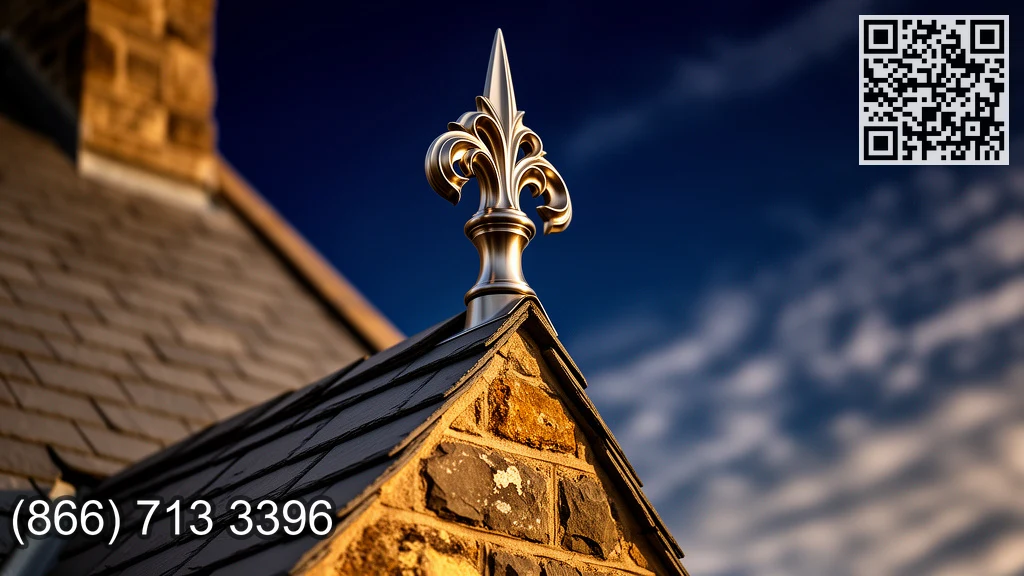
A finial is punctuation, not a megaphone. Most traditional finials rest at one 5th to one quarter of the cupola body height. Onion, spear, ball and spike, and fire kinds all have backgrounds. Newport and Charleston have a tendency to prefer onion light bulbs. Upstate New york city barns like high spikes with stacked switchings. When we chose Custom Finials for a 1920s Georgian revival campus collection, we scaled the spear finial to 18 inches on a 72 inch body and made use of a dual collar to resemble the entablature below. It looked inescapable, which is my north celebrity for these decisions.
Attachment issues as much as account. I avoid threaded rods that pass through a level roofing system cap and depend on gaskets. Rather, I make a conical tenon connection that secrets via a soldered escutcheon and seats right into a concealed bracket below the cap, then I close the joint with a leaded collar that loses water. The following conservator will certainly thanks when they can get rid of the finial without peeling off the entire cap.
Regional vernaculars worth honoring
If you are working on a Mid-Atlantic block farmhouse, check out Bucks Area barns and Government courthouse cupolas prior to you illustration. Fieldstone and block homes combine well with heavier bases, usually with straightforward square bodies and durable corner pilasters. In northern New England, roof shingles and slate invite shingled lantern bodies or copper-clad sides with vast louvers. In the Carolinas, cyclones push you toward low-profile bodies with solid anchorage and generous overhangs.
I keep a personal archive of measured drawings and images. The data includes a 1790s Pennsylvania barn lantern with a wooden cap, a cast-zinc apex from a 1915 Chicago roof covering, and a copper octagon from an 1898 seaside casino site in Rhode Island. When a client asks about custom cupolas, I pull 3 or 4 analogs, not to copy, but to establish a dialect. The goal is to sound like the area, not like a brochure.
Integrating dormers and various other roofing furniture
A cupola does not live alone. It beings in company with dormers, chimneys, snow retention, and gutters. The most effective jobs collaborate these as a single composition. Custom-made Dormers are specifically important. If your dormers make use of a 4 inch cheek return and a fascia with a 1.25 inch bed mould, repeating a variation of those accounts on the cupola base checks out salvometalworks.com as household. Align sightlines when feasible. On a lengthy roofing, I attempt to set the light's pilasters on the same vertical as dormer jambs or chimney shoulders. The eye reads placement as tranquil and intentional.
Water monitoring is the unnoticeable partner to elegance. When we pair Custom Leader Boxes with a new cupola, we scale the enthusiast boxes to echo the cupola's entablature height, and we pick a spout profile that does not battle the finial. For snow nation, appropriately put Custom-made Snow Guards keep moving drifts from crashing into the light's base blinking. I favor pad-style guards on slate and clip-style on standing seam, laid in a staggered pattern that steps up-slope toward the cupola. They go away aesthetically when you appreciate spacing and finish them to match the surrounding metal.
Repair versus replacement, and the values of intervention
Not every battered cupola asks for substitute. Many desire an individual repair service. I once restored a copper light whose cap had been covered with tar during the 1978 blizzard. The joints were audio under the mess. We softened the tar with convected heat, cleansed to bright steel, re-soldered three cold joints, and fabricated a brand-new drip on the leeward edge. The price was one third of substitute, and the proprietor maintained a century of handwork. That deserves greater than novelty. If a body is as well much gone to hold paint or the framing is compromised, change in kind. Salvage details where possible, like the initial finial or an actors base plaque, and established them back in a manner that reviews honestly rather than faux-aged.
Edge instances demand judgment. Lightning protection, for instance. I always incorporate a strike discontinuation at the finial spear, with a concealed down-conductor in the cupola post, then bond to the building's system. Done right, you will certainly never ever see it. Similarly, code-required screening for embers in wildfire areas can be placed behind louvers with smudged stainless mesh at the right aperture. It will a little minimize complimentary air, so I increase the louver size by 10 to 15 percent to make up without altering the outside proportion.
Modern performance under a timeless face
Historic shapes do not imply historical leakage. A well-detailed curb and flashing assembly is nonnegotiable. On slate roofs, I step and solder copper frying pans that secure under the 6th program up-slope and land over a counterflashed base at the cupola wall. The joint between slate and vertical copper gets a reglet with soft lead wedge, never a grain of sealant. On cedar or asphalt, I like a large, single-piece back pan that runs at the very least 12 inches up-slope and 8 inches on the sides, with hemmed sides and cleats at 12 inches on-center.
Condensation is one more contemporary reality. Cozy, wet indoor air can increase right into the cupola body and condense on chilly metal. A slim inflexible insulation layer inside the cap, confronted with a ventilated air space, prevents winter months drips. If the customer desires indoor light within the cupola for nighttime glow, I put low-wattage LED strips behind the louver blades, protected so the source can not be seen from the ground. Warm white at 2400 to 2700 K reads candle-soft, not sterilized. Hardwire to an image sensor, and examination from the street to avoid airport-beacon brightness.
Choosing a craft companion and defining without regret
Custom work does well or fails in the shop. You desire a maker that can reveal previous projects and speak through the unglamorous joints. Ask to see hemmed edges, a soldered joint finished with towel mop, a mechanically locked standing seam with constant rib height, and an example aging panel that demonstrates how their surface area will develop. Good stores, like Salvo Metal Works, welcome these conversations and will certainly sketch with you. Bring scaled illustrations, or a minimum of determined images, and settle on every expose and return. If the store additionally produces Customized Roof covering Vents, Personalized Chimney Shrouds, and matching Custom-made Leader Boxes, also better. A solitary hand across all metalwork makes the roof check out like a suite, not a mashup.
Your requirements packet should include:
- Dimensioned elevations and a minimum of one section with the base, body, and cap revealing blinking, aesthetic, and any interior baffles. A materials timetable that details steel kind and mood, thickness in ounces for copper or scale for steel, finish assumptions, and bolt alloy. A mockup demand, either a major edge or a half-size study, to validate moulding accounts, louver density, and cap seams.
Leave nothing to presumption. If you desire a 1 inch hem with a 0.5 inch return and a 0.25 inch disclose shadow, attract it. If the louver stiles need a 3/8 inch peculiarity to capture light, define it. The moment you spend here conserves money on the roof.
Installation choreography that shields the work
A cupola gets here like a gem and should have the exact same white-glove treatment. I stage installment on a day with wind under 10 knots. The aesthetic goes in first, flawlessly square, checked edge to collar within 1/8 inch on a 6 foot run. We dry-fit the light body to confirm disclose lines and shim with composite, not wood, to avoid future crush. Blinking profits in sequence, after that the body is established, through-bolted right into concealed stopping, and secured where the illustrations call for it, never ever a lot more. The cap and finial come last. I have actually seen a lot more damage from a quick-tempered crane crew than from any kind of storm. Pad sling points. Never ever cover slings around the louver blades. If the cupola is copper, maintain oily hands off intense steel that will certainly telegraph fingerprints throughout patina.
After collection, we sprinkle examination with a wide fan nozzle for 20 mins up-slope and both sides. Then we photograph every joint and preserve a log with areas of hidden fasteners and the course of any hidden conductors for lightning. Five years later, when a person asks about a stain, you will understand specifically where to look.
Patina, shade, and the long view
Paint color for wood bodies should have as much care as steel choice. Whites skew substantially. A dead, intense white can make a light look plastic. I tend to soften with a touch of grey or cream, even a whisper of eco-friendly on seaside homes to harmonize with copper in youth and verdigris in age. For slate roof coverings, a deep, nearly black green on the body can make the steel cap and finial sing without screaming. The trick is harmony with time. Copper's brown years are my favorite, from month 6 to year 6. If the exterior desires cool tones, let the brownish be the aluminum foil, and select trim shades that do not fight it.
Maintenance is routine, not concern. An annual ladder check to clear bird nests, a soft brush to remove pollen, a scan of joints for verdigris streaking that recommends a pinhole. Timber obtains a light laundry and touch-up on any type of micro-cracks in paint at joints. Steel obtains left alone. Do not brighten copper unless you plan to keep brightening it every three months. The very first rub ruins the starts of an all-natural patina and sets you on a treadmill.
Case notes from the field
Two jobs remain as proof that restraint reviews as luxury.
On a 1912 Beaux-Arts town hall, the initial cupola had been changed in the 1970s with a boxy vent clad in white light weight aluminum. We researched historical pictures, developed a new octagonal body from cypress, and covered the cap in 20 ounce copper with a hardly perceptible dual standing seam. The finial, a 24 inch spear with 2 rings, resembled the building's actors stone urns. We worked with Custom Leader Boxes at the eaves, sized their faces to the light's entablature, and ran downspouts with peaceful offsets that duplicated the pilaster rhythms. The entire roofing system regained its public grace. People do not aim at any type of solitary component. They search for and state, now it really feels right.
At a lakeside lodge integrated in 1927, hefty snows had actually sheared a previous lantern's blinking twice in a years. We restored the curb as a sled, shaped to split drifts and lift them prior to they bound at the base. We added very discreet Custom-made Snow Guards up-slope in a chevron pattern and tuned the louver visibility to keep wind-driven powder out without depriving the attic room. The lantern body was shingled in Alaskan yellow cedar to match the dormers, with a lead-coated copper cap. Five winters months in, not a solitary leak, and the lodge keeps its shape against the white.
When cupolas are not the answer
There are roofings that do not want a cupola. Low-slung midcentury ranches, carefully minimal enhancements, and specific Spanish Colonial accounts can look gadgeted with a light ahead. On those jobs, I use a family of information to honor the spirit of upright punctuation without a literal cupola. Custom Roof Vents with louver deals with that repeat historic proportions, a gauged Personalized Smokeshaft Shadow with a fragile drip side and a silent ridge of joints, or a set of Personalized Dormers scaled to carry the composition can provide the lift the roofing system requires. The throughline is the same: proportion, restriction, and stability in materials.
Budget, schedule, and what sincerity costs
Clients often ask where the money goes. On a mid-size personalized copper cupola, 4 to 6 feet square, integrated in a standard shop, expect the metalwork and wood body to eat 120 to 220 labor hours depending on detail, plus product. At current product costs, copper alone can stand for a 3rd to fifty percent of the total. Installment with hosting and crane commonly runs a day with a 3 to 4 person staff. From authorized drawings to set on roof covering, sensible schedule is 8 to 14 weeks. You can trim cost with a simpler cap profile, fewer mouldings, or a timber cap with sheet steel weathering, but every faster way reveals. I prefer to reduce size slightly within percentage than undervalue the craft.
There are efficiencies. If the same store makes your Custom Leader Boxes, Personalized Smokeshaft Shrouds, and any type of Personalized Finials for the job, you save time on finishes and shipping, and you secure consistency that checks out as raised. Coordination is a kind of luxury.
A quiet argument for permanence
The ideal action of a standard silhouette is just how little you observe it by year 3. It seems like it has always existed. It keeps water out, lets air move, and makes the roofline appearance inescapable from the roadway. The craft that enables such silent is not loud or trendy. It holds your horses, precise, and pleased to be unseen from the street. Collaborate with individuals who appreciate hem widths, louver pitch, and the noise a mallet makes on a folded up joint. Request drawings that deal with the profile, then leave the hand of the manufacturer noticeable in the solder bead. The building will certainly lug that sincerity through storms and sun, and so will your eye.
Traditional silhouettes endure since they are not methods, they are grammar. When you compose a roofing with custom-made cupolas, matching dormers, thoughtful snow retention, and a regimented collection of metalwork, the house or hall speaks in its native tongue. The roofline is not a collage of parts. It is a sentence, elegantly punctuated.